
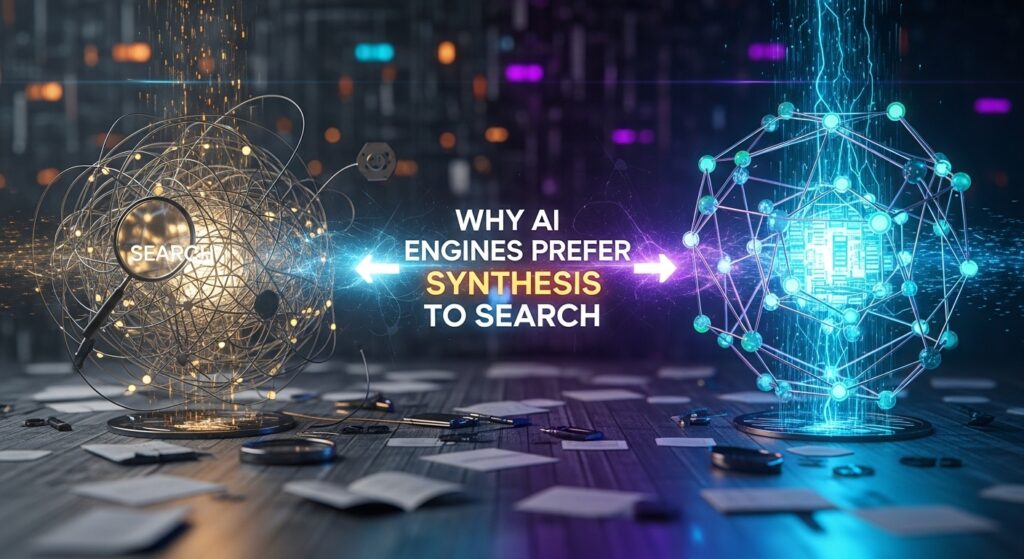
The era of simply ranking on page one is fading as generative models change how users find information. Today, the focus has shifted from directing traffic to being the source of truth that an AI synthesizes into a single response. If a brand’s data isn’t structured for these machines, it essentially becomes invisible to the most efficient researchers.
Visibility now depends on how effectively content feeds AI engines and their underlying models. This evolution requires a fundamental change in how information is organized across the digital ecosystem.
Why Does the Logic of Retrieval Matter More than Rankings?
SEO often focuses on winning the click, but AI engines focus on winning the summary. These systems don’t just point to a website; they digest the content to provide a direct answer. This means the priority is now on factual density and structural clarity.
Think of it like a legal briefing where the judge only wants facts. If your content provides clear, verifiable points, the model treats it as a source. This shift moves away from keyword density toward being the most reliable data point in a network.
How Can Technical Structure Influence Generative Responses?
Technical organization acts as a map for the machine to find what it needs. When a page follows a logical flow, the model can extract and verify facts with higher confidence. These specific elements define the success of modern extraction:
Why Schema Markup Functions as a Universal Translator
Structured data provides the explicit context that algorithms need to identify entities. By defining specific roles like authors or prices, you remove any ambiguity from the text. This clarity allows the engine to cite your data as a verified truth during the synthesis process now.
How Tables and Lists Improve Extraction Success
Large language models excel at processing data that is already categorized. Using tables or bulleted lists helps the machine isolate key variables without needing to parse complex sentences. This format increases the likelihood of your specific facts appearing in the final generative response today completely.
What Role Sentence Clarity Plays in Natural Language Processing
Direct and simple sentences reduce the computational effort required for a model to understand a concept. When you use active voice and avoid jargon, you make it easier for the processor to summarize your points. Clear language is the most effective way to communicate clearly.
What is the Myth of the Secret Keyword?
Many professionals still believe that hitting a certain percentage of keywords will unlock the gates of AI engines visibility. This is a common misconception that ignores how modern transformers actually function. These models don’t count words; they analyze the relationships between concepts and the user intent.
Success comes from covering a topic so thoroughly that the model cannot ignore your expertise. Instead of chasing high volume terms, you should focus on providing the logic behind every claim. This approach builds semantic authority, which is what the engines are looking for.
Why Does Brand Reputation Drive Algorithmic Trust?
Building a reputation in an automated world requires a consistent digital footprint. The engine looks for external signals that confirm your site is a legitimate authority in its field. These pillars of reputation help define your digital standing through the lens of external proof:
How External Citations Serve as Verifiable Proof
Backlinks from high authority domains act as a vote of confidence for the AI. When other experts reference your work, the model views your content as a foundational source of information. This consensus is a primary signal that your data is worth repeating today.
Why Professional Credentials Matter for Content Selection
Showing clear evidence of real world experience helps the engine establish trust. When content is tied to a verified expert with a history of published work, the algorithm is more likely to prioritize those insights. Expertise is a shield against being replaced by digital noise.
Where User Sentiment Fits into the Authority Equation
Algorithms monitor public feedback and reviews to gauge the reliability of a source. Positive engagement across various platforms tells the machine that the content is helpful to real people. Maintaining a high standard of accuracy is the only way to build lasting digital trust online.
Where Does the Digital Hub Analogy Apply?
Anonymized data from top performing sites shows that organizing content around central pillars improves AI citation rates. Think of a central hub as a deep dive into a major topic, with spokes that address specific, related questions.
This structure mirrors the way knowledge graphs are built. This strategy is like building a library where every book is cross referenced. If a user asks a niche question, the AI can follow the spokes back to the hub to find the context. This creates a powerful web of information that is valuable to the machine.
When Should You Audit Content for Synthesis?
To see immediate improvements, you should focus on rewriting your headings to answer common questions directly. Instead of using clever or abstract titles, use the exact interrogative phrases that users are likely to ask an AI. This alignment makes your content the most relevant match.
Updating your author profiles to include external accolades and professional certifications is a savvy move. It strengthens the trust signals that an AI engine uses to verify the quality and authority of your information. By making these updates today, you’re positioning your content for the next generation.
Why Choose Us: The Strategic Edge in the AI Era
Navigating the transition from traditional search to generative synthesis requires more than just a standard SEO checklist. It requires a partner who understands the brain of the machine. The brain of a modern AI engines don’t just look for keywords; it looks for relationships, intent, and verified expertise. Here is why we are uniquely positioned to protect and project your digital authority:
Expertise in Semantic Engineering
We don’t just write for keywords; we build semantic maps. By understanding the latent relationships between your core topics and the questions your audience is asking, we ensure that AI engines see your brand as the definitive source of truth. We speak the language of entities and intent, not just traffic volume.
Data-First Technical Optimization
While others focus on surface-level aesthetics, we dive into the plumbing. We specialize in implementing high-level Schema Markup and structured data environments that act as a universal translator for AI crawlers. We ensure your data is machine-readable so it can be extracted and cited with 100% accuracy.
Future-Proofing Your Authority
The digital landscape changes weekly. We provide a proactive strategy that anticipates algorithmic shifts. By focusing on E-E-A-T (Experience, Expertise, Authoritativeness, and Trustworthiness), we ensure your content isn’t just a temporary trend, but a foundational pillar that AI engines return to time and time again.

Mastering the Synthesis Economy
The shift from a list of links to a single generated answer represents the biggest change in information retrieval since the birth of the internet. Success in this new era isn’t about gaming the system; it’s about becoming the system’s most trusted advisor.
To remain visible, brands must move away from thin, keyword-stuffed content and toward dense, structured, and verified knowledge. By organizing your digital footprint to be easily ingested and summarized by AI engines, you aren’t just surviving the change you are leading it. The future belongs to those who provide the best answers, not just the loudest ones.