
The online world has not only changed; it has been completely rewritten. When you read this in 2026 AEO, you will have known the truth that conventional marketers have been telling the world for years: the Ten Blue Links are dead.
The Shift from Search to Discovery
For two decades, digital marketing focused on Google’s first page, prioritizing clicks, backlink empires, and keyword density. Today, the user experience has fundamentally shifted. Users no longer just search and browse; they ask questions and provide context to receive direct answers.
It is a time of Answer Engine Optimization (AEO).
The AEO Revolution
As leading AEO service providers, we’ve seen companies using 2020-era SEO methods become invisible. Those embracing the AEO revolution now lead the discourse. This guide explores 2026 AEO and explains why business survival depends on optimizing for machines rather than just human users.
The Death of the Click and the Rise of the Answer
In order to comprehend AEO, it is important to accept the fact of the 2026 search environment.
The Zero-Click Reality
By late 2025, statistics showed that over 60% of information requests result in no website click. When users ask Gemini, ChatGPT, or Perplexity a question, they get a full, synthesized answer immediately. This process skips your site entirely, removing the traditional intermediary role of the webpage.
The objective of the old world (SEO) was Traffic.
Visibility and Citation is the objective in the new world (AEO).
The New Gatekeepers
Google is no longer a library index, but rather an AI-enhanced oracle. SearchGPT, Google Gemini, Perplexity, and Claude will not see websites, they will read them in 2026. They process billions of pages of information and reassemble that information into a conversation reply.
Unless your information is organized in such a manner that these Large Language Models (LLMs) easily read, understand, and distrust it, you are not there. You will not even be on Page 2, you will not be in the answer at all.
What is AEO (Answer Engine Optimization)?
The technical and creative science of maximizing content, data, and brand prompts in such a manner that AI models (Answer Engines) view your brand as the main expert on a subject matter.
AEO is based on Entity Authority and Content Retrieval, on the other hand, that SEO, which aims at ranking a URL for a particular keyword string.
| Feature | 2026 AEO (The New Standard) |
| Primary Goal | Become the source of the AI’s answer. |
| User Behavior | Conversational questions (“What running shoes are best for flat feet and marathons?”). |
| Content Structure | Structured, data-rich “Knowledge Blocks.” |
| Key Metric | Share of Voice / Citation Frequency. |
| Technical Focus | Schema Markup, Entity Graphs, RAG Optimization. |
AEO is not a substitute for SEO, it is its evolution. Old-fashioned SEO contributes to the crawler discovering your page. AEO contributes to the AI knowing and adhering to your page to the point of quoting it.
The Three Pillars of a 2026 AEO Strategy
Aligning with AI Incentives
Many businesses fail by trying to deceive AI models, which is impossible with internet-trained systems. You must align with the AI’s incentives instead. Our proprietary AEO approach focuses on three core pillars:
- Entity: Defining who you are.
- Structure: Organizing what you say.
- Trust: Proving how you’re reliable.
Pillar 1: Optimization of the entity (The “Who”)
In the year 2026 search engines are more based on the Knowledge Graph. The search engines do not search with strings of text, but search with what are called Entities: people, places, things and concepts.
In case you are selling Cloud Software, the AI should be aware that your brand is a legal and conceptual business of “Cloud Computing,” SaaS, and Enterprise Security.
Brand Association: This is done by ensuring that the AI knows your identity, through saturating the web with consistent entity signals (Wikidata, Crunchbase, consistent N.A.P. data, and high-authority mentions).
The Knowledge Panel: When your brand lacks a well-established Knowledge Panel or a distinct definition of your entity in the training data of the AI, there will be few times you are mentioned as a source of knowledge.
Pillar 2: The Answer-First Content Model (The “What”)
Gone are the days of interring the lead. AEO requires the style of writing the Inverted Pyramid.
The Direct Answer: Each content should have a brief and straightforward answer to the intent of the user. The AI is able to steal that snippet and deliver it to the user easily.
Conversational Expansion: After the direct response, there should be an expansion of content to the realm of People also ask. We examine user communication streams with AI bots in order to anticipate the subsequent questions and provide answers on the same page.
Machine format: The AI models are fond of organization. Bullet points, numbered lists, comparison tables, and distinct H2/H3 headings will be gold. A wall of text will be tough to read by a bot, a table with a price vs. value comparison is sunshine.
Pillar 3: Technical Trust and schema (The “How”)
This is where technical knowledge of AEO service providers comes into play. We are talking machine language: Schema Markup.
Structured Data: We do not simply use simple schema. We utilize Speakable schema, HowTo, Dataset and FAQPage. Such a code runs in the background, clearly spelling it out to the AI: this is the text of the question, and this is the text of the answer.
RAG Optimization: The modern search works in the form of Retrieval-Augmented Generation (RAG). The AI crawls your information to create a response. When your site is slow, full of bad code or tricky to crawl, the RAG system will pass over you for a cleaner source.
Optimizing for the Big Four
You do not just optimize Google. You are in a multi-front war.
1. AI at Google Overviews (previously SGE)
Google is the king of commercial intent. The point where users want to buy usually begins here. The Freshness and Merchant Data are the priorities of Google AI snapshots.
Strategy: Live inventory data, real-time pricing updates on Merchant Center, and weekly-updated listicles that include the “Best of.”
2. ChatGPT (SearchGPT) / OpenAI
The models of OpenAI give more emphasis on Authority and Logic. They are not so likely to refer to a blog that is salesy but would refer to a whitepaper, an authenticated news source, or a detailed guide.
Strategy: The release of in-depth white papers, PDF documents, and information analysis that the AI considers its primary source content.
3. Perplexity
The Citation Engine is called Perplexity. It is combative regarding referencing. It is fond of scholarly discipline and proper sourcing.
Strategy: high levels of internal connections and outbound references. Your work should be formatted like a research paper: well-researched and factual to be picked up by Perplexity.
4. Voice Assistants (Siri/Alexa/Gemini Live)
In 2026 voice search is multimodal. It is not “Hey Google,” but it is pointing a camera at a broken sink and saying, “How do I fix this?”
Strategy: Visual AEO. Making images and video automatic and descriptive with alt-text and transcripts to allow the AI to “visualize” your answer.
The New Metrics of Success
Among the most frequent questions that clients often ask is the following: “In case nobody clicks, how will I know that I can measure success?”
This presents the most difficult change of mindset to the traditional marketers. During the AEO era, we are measuring not only the traffic but also the Influence.
1. Share of Model (SoM)
What is the frequency of mention of your brand when a user is asked a category-defining question? When a user queries, “What are the best CRM tools for small business in 2026?” Does your brand make it in the list of 5 provided by ChatGPT? Otherwise, there is no market share.
2. Brand Sentiment Analysis
What does the AI say about you? Is it linked to you like it is to “expensive and buggy,” or “reliable and innovative”? We keep track of the mood of AI-generated messages to control your brand reputation at the ground level.
3. Qualified Conversions
While total traffic volume may drop, the users who do click through from an AI answer are highly qualified. They’ve already read the summary and possess high intent. Consequently, AEO leads convert at a rate 2x to 3x higher than traditional SEO leads.
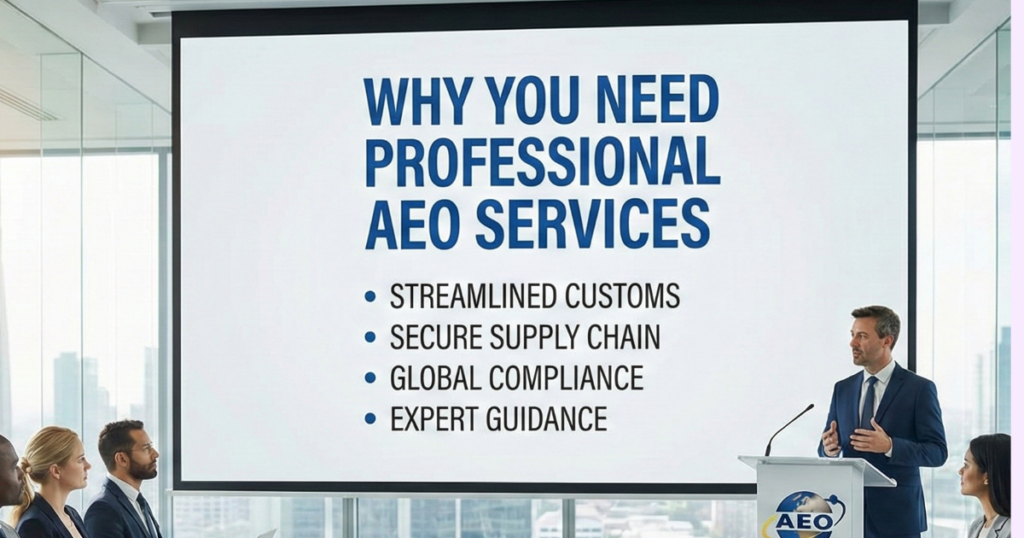
Why You Need Professional AEO Services
It is one thing to read about AEO and another to implement it. The move between 2020 SEO and 2026 AEO is technically very complicated and costly. This is why the only scalable way to go is by collaborating with a dedicated service provider.
The Technical Barrier
Implementing AEO requires deep developer proficiency in several areas:
- Nested Schema markup
- RAG pipeline optimization
- Knowledge Graph entity management
Standard content writers can’t optimize the mathematical vectors of LLMs. Our team includes data scientists, prompt engineers, and technical SEOs who understand AI architecture.
The Pace of Change
In 2026, AI models update on a weekly basis. Strategies effective for Gemini 2.0 might fail with GPT-6. We continuously refresh sandbox sites with the latest model updates to identify which factors drive citations, removing the guesswork from the algorithm.
The Hallucination Problem
If you don’t control your brand’s narrative, AI will invent one. We’ve seen companies suffer when AI hallucinates that products are discontinued or incompatible. Our Brand Protection AEO services combat these falsehoods by flooding the web with accurate data to re-educate the models.